
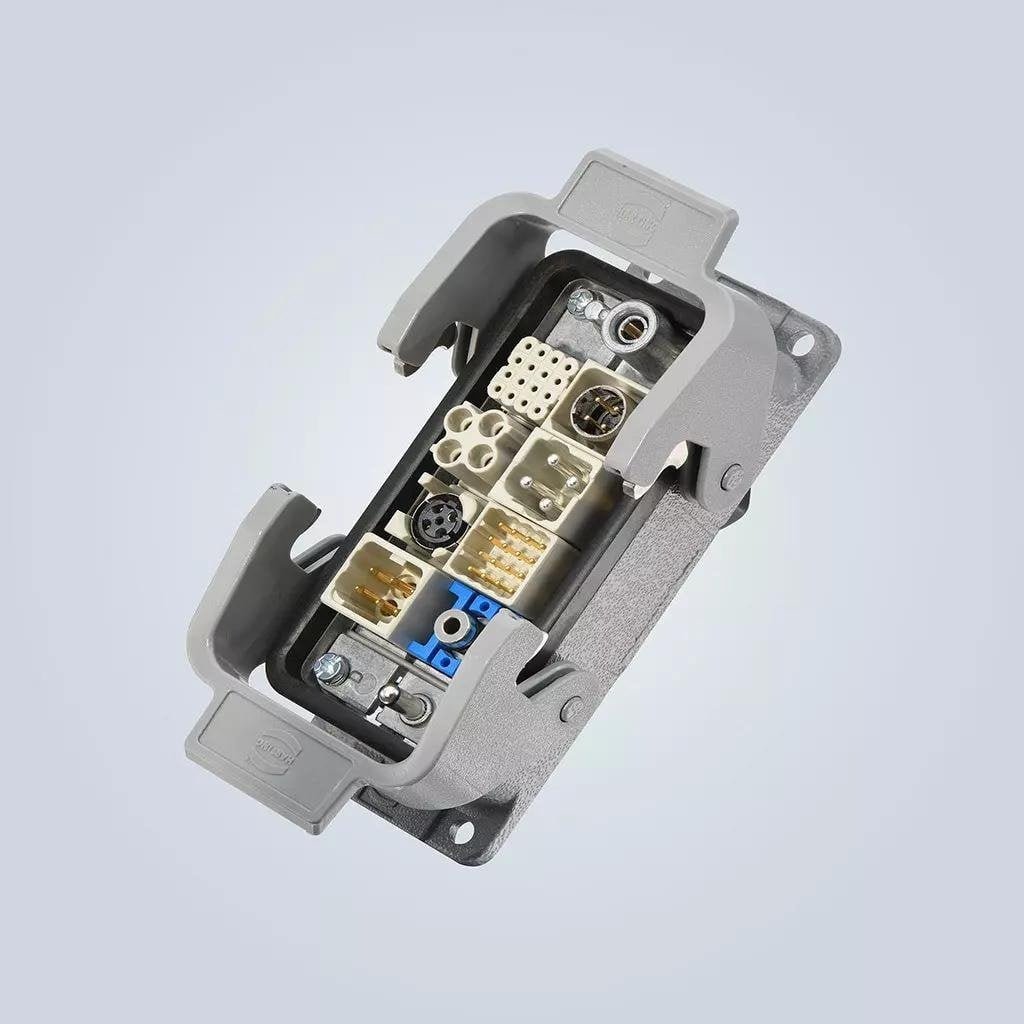
the world of industrial connectivity, HARTING has established itself as a global leader, renowned for its robust, reliable, and highly versatile connector solutions. Whether you are designing machinery, automation systems, or control cabinets, choosing the correct HARTING connector is critical to ensuring system stability, performance, and longevity. This guide will walk you through the essential factors to consider when selecting HARTING connectors for your specific application.
1. Understand Your Application Requirements
The first step in selecting a connector is to clearly define the demands of your project.
- Transmission Type: What are you connecting?
- Power: High-current/voltage for motors, drives, and main power supplies.
- Signal: Low-current for sensors, actuators, and control signals.
- Data: High-speed communication (Ethernet, Fieldbus, USB).
- Hybrid: A combination of power, signal, and data in one interface.
- Environment: Where will the connector operate?
- Indoor/Outdoor: Exposure to elements like rain, snow, or UV light.
- Harsh Conditions: Dust, oil, chemicals, or high vibration (e.g., factory floors, construction machinery).
- Temperature: Extreme high or low operating temperatures.

2. Key Electrical Specifications
Current & Voltage Rating
- Rated Current: The maximum continuous current the contacts can carry. Always ensure this exceeds your actual load (a 1.5x safety margin is common).
- Rated Voltage: Determines insulation and clearance requirements. Must match your system’s operating voltage.
Number of Poles (Contacts)
Count the total number of connections needed (power, signal, ground/PE). HARTING offers solutions from a few contacts to dozens.

3. HARTING Connector Series Overview
HARTING’s flagship Han® series offers a wide range of standardized housings. Choosing the right series is foundational.
Han® A Series
- Compact & Lightweight: Ideal for small control cabinets, sensors, and applications with limited space.
- Use Case: Signal transmission, small devices.
HARTING Han A Series Connector

Han® B Series (The Industrial Standard)
- Versatile & Robust: The most popular general-purpose series.
- Balanced Size & Performance: Suitable for a mix of power and signal.
- Use Case: Machine tools, general industrial equipment, standard control interfaces.
HARTING Han B Series Connector

Han® E / ES Series
- High Power Focus: Designed for heavy-duty, high-current applications.
- Robust Housing: Excellent protection and current-carrying capacity.
- Use Case: Motor connections, power distribution, heavy machinery.
HARTING Han E Series Connector

Han-Modular® Series (The Ultimate Flexibility)
- Modular Design: Mix and match power, signal, data, coax, and even pneumatic modules in one housing.
- Future-Proof: Easy to reconfigure or expand.
- Use Case: Complex machinery, robotics, control panels requiring multiple media types.

M8 / M12 Circular Connectors
- Compact & Rugged: The standard for industrial automation and sensorsHARTING Technology Group.
- Fast Connection: Ideal for field wiring.
- Coding (A, B, D, X, L): Prevents mismating and defines function (e.g., X-Code for 10Gbps Ethernet).

4. Mechanical & Environmental Considerations
IP (Ingress Protection) Rating
- IP65: Protected against dust and low-pressure water jets (most common industrial).
- IP67: Protected against dust and immersion in water up to 1m.
- IP68: For permanent immersion.
Always select an IP rating suitable for your environment.

Termination Technology
How the wire connects to the contact:
- Crimp: Most reliable, vibration-proof (recommended for industrial).
- Screw: Simple, tool-free field termination.
- Cage Clamp / Spring: Fast, tool-less termination.

Locking & Mounting
- Locking: Levers, screws, or bayonet locks to prevent accidental disconnectionHARTING.
- Mounting: Surface mount, flush mount, cable-to-cable.
5. Step-by-Step Selection Checklist
- Define the Signal: Power, Signal, Data, or Hybrid?
- Calculate Load: Determine required current, voltage, and number of poles.
- Assess Environment: Choose IP rating and temperature resistance.
- Select Series: Han® A/B/E for standard; Han-Modular® for complex; M12 for automation.
- Choose Termination: Crimp for reliability, Screw for simplicity.
- Verify Compatibility: Ensure male/female mating parts and accessories (hoods, gaskets) are compatible.
Conclusion
Selecting the right HARTING connector is a balance of electrical performance, mechanical robustness, and environmental resilience. By systematically evaluating your application’s needs and matching them to HARTING’s comprehensive product portfolio, you ensure a secure, long-lasting connection that stands up to the toughest industrial challenges.
For the most precise selection, always consult the official HARTING catalog or use their online Han® Configurator tool to design your perfect connector solution.